
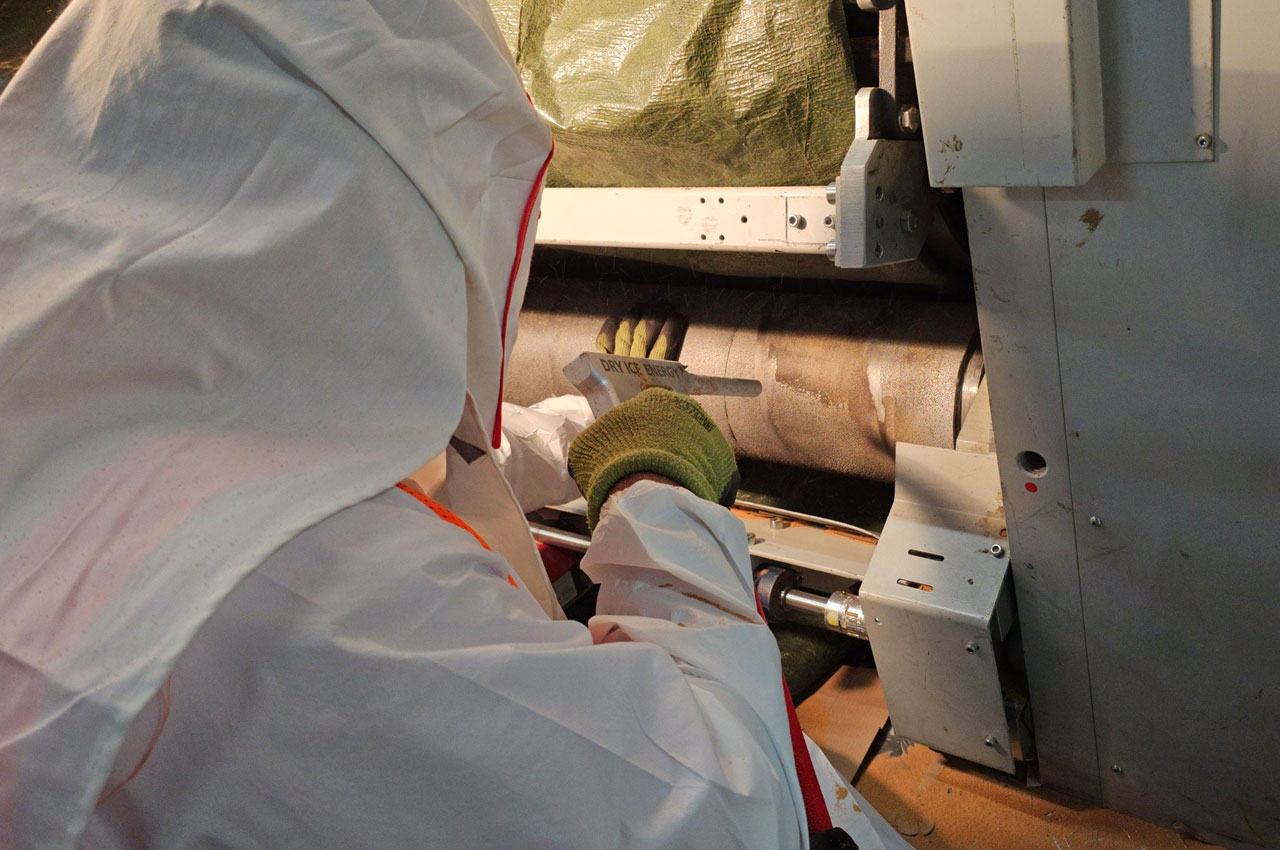
Print and packaging dry ice blasting
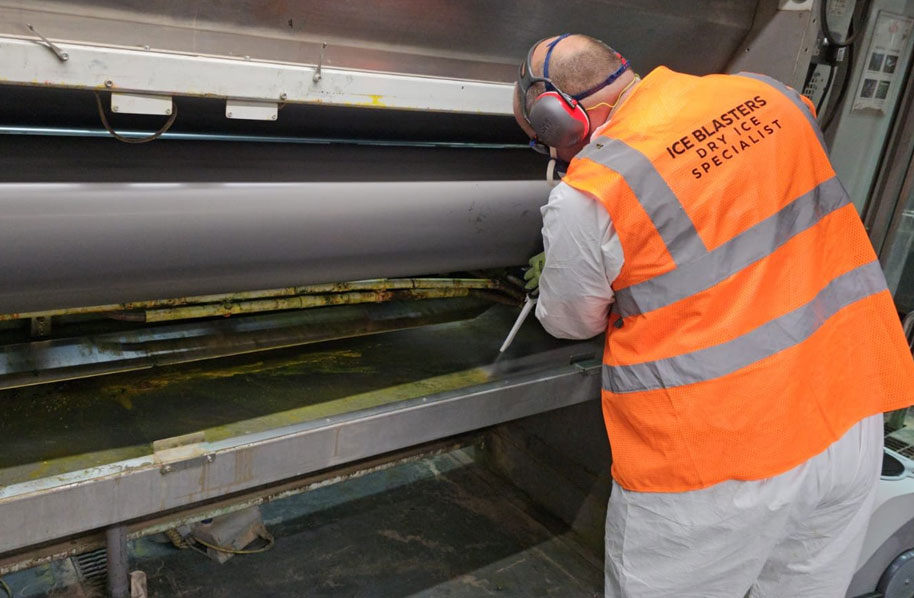
Fast, residue-free cleaning that keeps lines running
When your presses and lines slow down, quality drops and waste climbs.
We use dry ice blasting to clean print and packaging equipment quickly.
No harsh chemicals, water, or abrasive media.
You get a deep clean that protects sensitive parts and helps you keep production moving.
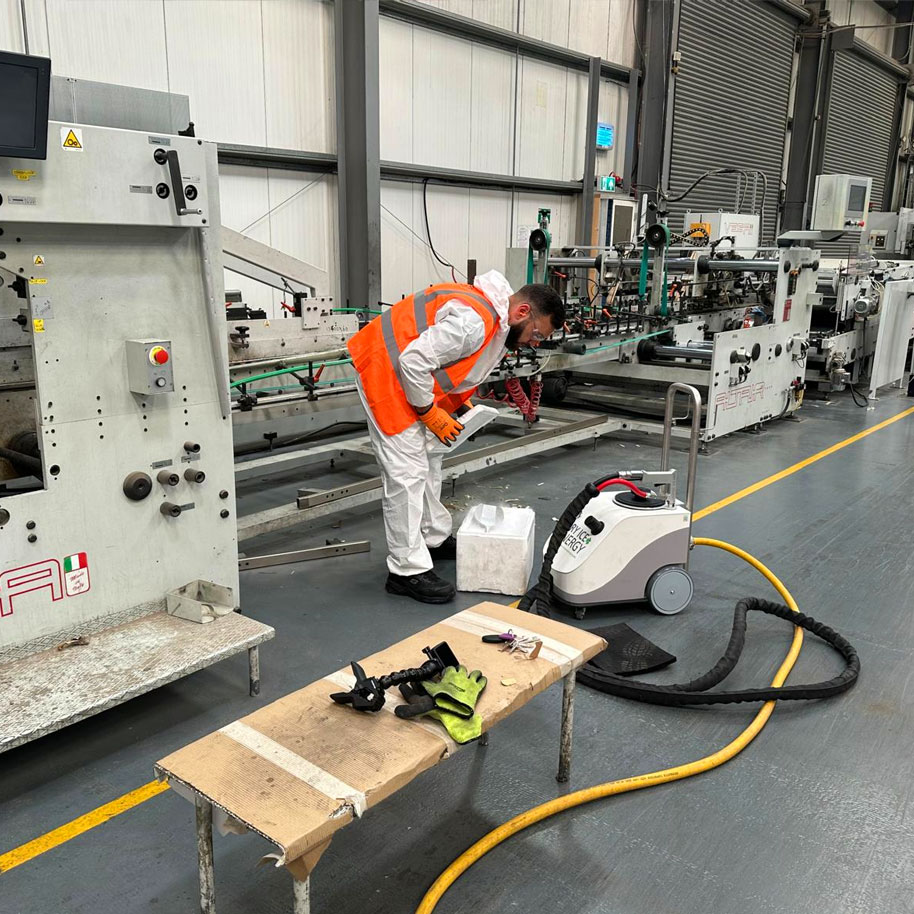
Print and packaging dry ice blasting services
Why dry ice blasting works for print and packaging
- Removes ink, coatings, adhesive and paper dust without scratching surfaces
- Cleans in place – less strip-down, less lost time
- Leaves no secondary waste – the dry ice turns to gas on impact
- Helps reduce contamination that affects print finish, adhesion and pack quality
- Supports safer maintenance by cutting solvent use and wet cleaning
What we clean
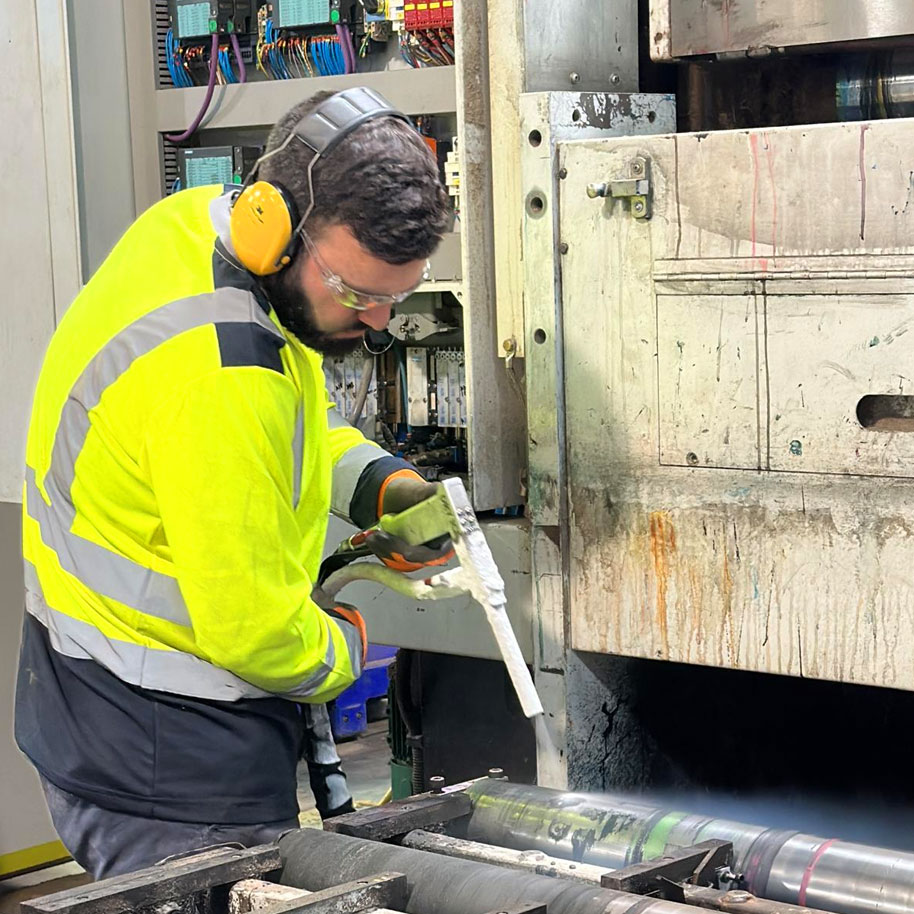
- Printing presses – offset, flexo, digital and gravure
- Packaging machinery and converting lines
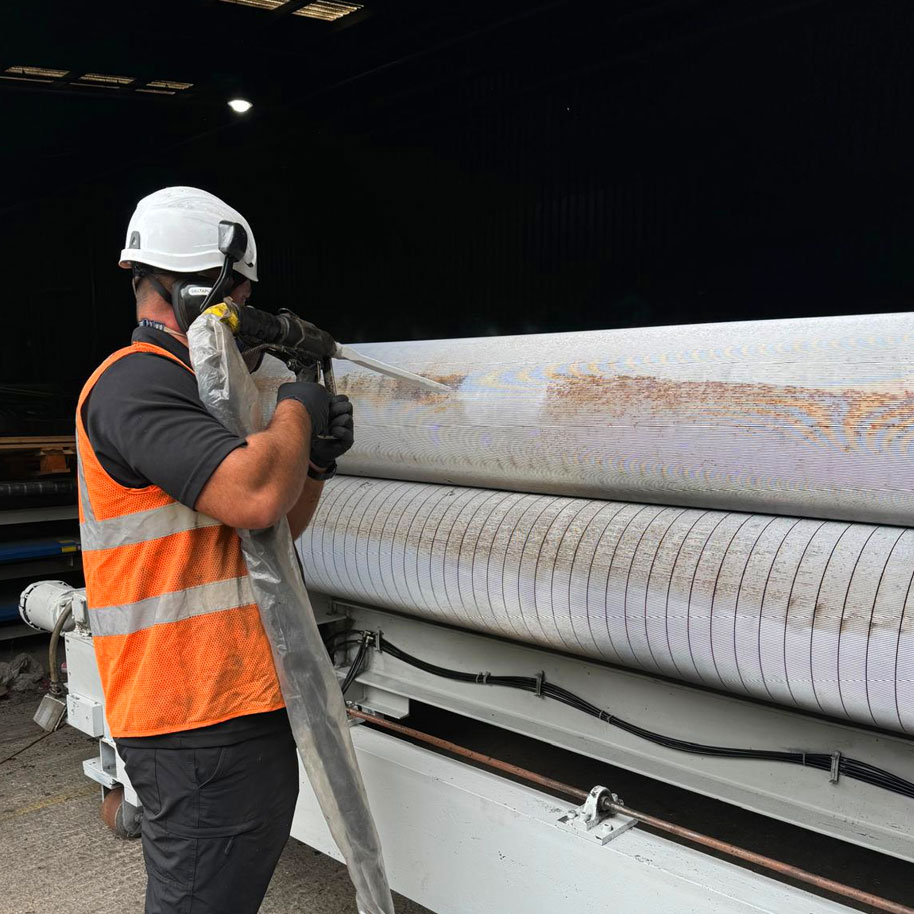
- Rollers, cylinders and conveyors
- Glue guns, nozzles and adhesive systems
- Die cutters, folder-gluers and laminators
- Electrical panels and control cabinets
- Paper fibre, dust and debris around production areas
Dry ice blasting across the UK
We bring the kit to your site and clean the equipment in situ, so your team avoids long shutdowns and your line returns to output sooner.
Common applications in the print and packaging sector include –
Presses and production equipment
We lift ink, varnish, coatings and residue without moisture that risks alignment and print quality.
Rollers, cylinders and conveyors
We restore grip and cleanliness without wear from abrasive methods.
Adhesive and glue systems
We remove hardened glue build-up without solvents and without lengthy strip-down.
Electrical panels and controls
Dry, non-conductive cleaning supports safe maintenance around sensitive electronics.
Dust and paper fibre removal
We clear dust and debris that drive defects and raise housekeeping risk.
Packaging and converting lines
We clean die cutters, laminators, folder-gluers and forming equipment with speed and control.
Benefits of dry ice blasting for print and packaging cleaning
Non-abrasive cleaning
Safe on rollers, belts, sensors, wiring, and components.
No water or chemicals
Prevents corrosion and contamination and suitable for electrics.
Residue-free process
Dry ice sublimates from a solid to a gas and unlike other methods of media blasting it produces no secondary waste.
Reduced downtime
Equipment can be cleaned in situ and while assembled.
Improved product quality
Cleaner equipment leads to more consistent output and improved KPI & OEE results.
Safer work environment
Clean, safe and no chemicals.
Why choose Ice Blasters for print and packaging dry ice blasting?
Experience with print and packaging manufacturing environments
Skilled, safety focused blasting operators
Mobile, on-site service for production facilities
Environmentally responsible cleaning methods
Reliable results that support uptime and quality
FAQs
What makes dry ice blasting safe for print machinery?
Dry ice blasting cleans without abrasion and without water, so we protect surfaces, bearings, sensors and alignment points while removing build-up.
Will dry ice blasting leave any residue?
No – the dry ice turns to gas on impact, so you don’t deal with slurry, wastewater, or leftover media.
Do you clean equipment without taking it apart?
Yes. We clean many assets in place, which reduces strip-down time and speeds up restart.
What types of contamination do you remove?
We remove ink, coatings, adhesive, glue build-up, paper dust, fibre, and general production debris.
Do you work on electrical panels and control cabinets?
Yes. Dry ice blasting stays dry and non-conductive, which suits control cabinets and panels during planned maintenance.
How much downtime will you need?
Downtime depends on the asset, access, and build-up level. We plan the work around your shift pattern so you return to production as soon as practical.
Do you cover the whole UK?
Yes. Our mobile teams travel nationwide to print and packaging sites.
What info do you need for a quote?
Asset type, photos of the build-up, site location, access limits, and your preferred window for the clean.